MENULUX BLOG
Robots in Restaurant Operations: Technological Solutions That Reduce Staff Workload
Menulux POS Systems · April 07, 2026When you look at a busy restaurant dining room, you can immediately see where your business struggles the most. In the sector, about 4 out of every 10 operators say they do not have enough staff to meet current customer demand. The pressure created by this situation is felt especially clearly during peak shifts.
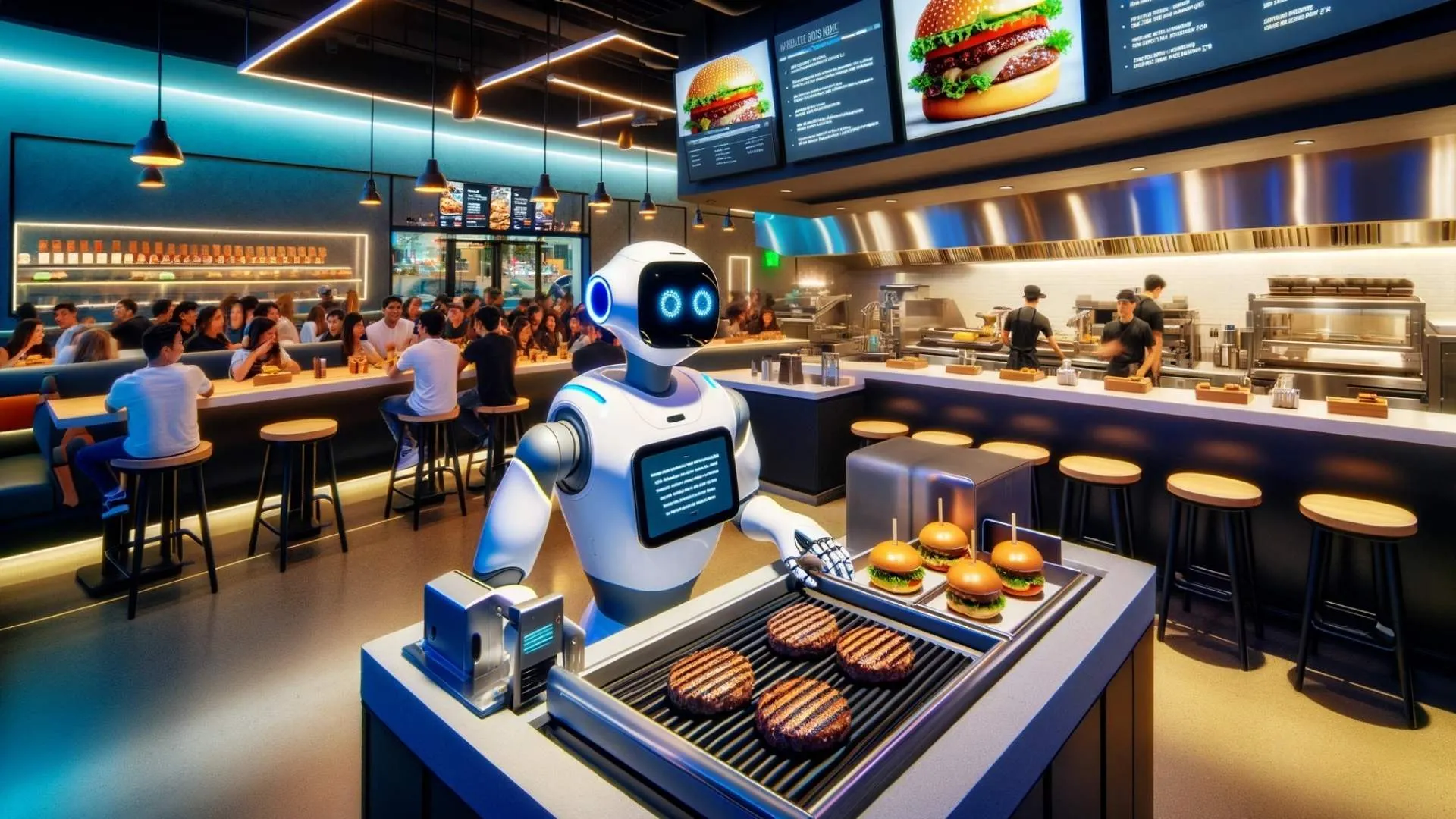
Every extra step taken during service turns into a factor that slows down operations. Instead of focusing on guests, waiters constantly move back and forth between the kitchen and the dining area, support staff try to keep up, and chefs run around to fill the gaps. The result is slower table turnover times, a tired team, and a customer experience that falls short even in moments when expectations are high.
The main function of restaurant robots is to target these pressure points in operations. By taking over repetitive movement and cleaning tasks, they reduce the daily workload and help maintain consistent service quality even when staff numbers change.
In this article, we will discuss where robots are positioned in restaurant operations, how they function in real working environments, and how to decide whether automation is a solution to the real problems in your kitchen/dining area.
Highlights:
• Robots Take Over Repetitive Movements: By handling tasks such as food delivery and cleaning, they prevent your team from constantly shuttling back and forth.
• Service Flow Continues During Peak Hours: A restaurant robot ensures uninterrupted service even during crowded hours without extra overtime or additional staff.
• The Team Focuses on Guests: Your staff can dedicate more time to hospitality instead of carrying and cleaning tasks.
• Labor Pressure Accelerates Adoption: Staff shortages and rising wages make automation a practical choice.
• Results Are Visible in Daily Operations: Time savings, smoother workflows, and reduced physical workload for staff are clearly observable.
What Is a Restaurant Robot?
Restaurant robots are autonomous machines that perform specific, repetitive tasks in dining rooms and service areas. They are used to support daily operations. Their tasks are limited to movement, delivery, and maintenance jobs that follow the same pattern in every shift. Thanks to their built-in navigation and safety systems, a service robot can move autonomously in dining areas, kitchens, and service zones. You can assign them clear tasks such as transporting food, carrying supplies, or cleaning floors.
How Do Restaurants Use Robots in Their Daily Operations?
Restaurants use robots to ensure smooth daily service without adding extra burden to already busy teams. A restaurant service robot takes over routine tasks that slow down operations and pull staff away from guests.
Here are some common use cases:
• Food and Product Delivery Between Kitchen and Tables: A service robot performs regular transport from the kitchen to the dining area. This reduces staff congestion in narrow spaces and allows waiters to spend more time with guests instead of constantly walking back and forth. It maintains service speed during peak hours without the need for extra staff.
• Assisting with Table Clearing: When guests finish their meals, service robots help collect used plates, trays, and service items. This keeps table turnover steady even when teams are understaffed. The dining area remains organized without rushing cleaning processes.
• Multi-Zone and Multi-Floor Transport: In large hotels and restaurants, robots transport supplies between kitchens, service stations, and different dining areas. With elevator access, they eliminate the need for manual inter-floor transport. This prevents delays that slow down multi-level operations.
• Continuous Floor Cleaning During and After Service: Cleaning robots handle routine floor cleaning during off-peak hours and at night. This keeps floors consistently clean without pulling staff away from service. Cleaning schedules remain uninterrupted and no overtime costs are incurred.
• Logistics and Material Transport in the Kitchen Area: Robots transport ingredients, shelves, and prep items between stations during long shifts. This reduces interruptions in kitchen workflow during busy service hours. Thanks to the service robot, kitchen staff can focus on cooking and presentation instead of carrying loads.
Where Are Robots Used?
Restaurants are deploying robots to alleviate pressure caused by staff shortages, long distances, and repetitive tasks. Here are real-world examples from different concepts:
• Chili’s Grill & Bar: During peak hours, it uses service robot to carry food and clear tables. This reduces the burden on waiters constantly going back and forth in large dining halls. While the team focuses on guests, robots handle predictable tasks.
• Denny’s: In some branches, it uses robot waiters to deliver food and dishes from the kitchen to tables. The aim is to maintain service consistency even if staff numbers change.
• Haidilao Hot Pot: In large and dynamic dining halls, it uses service robots to deliver ingredients and food directly to tables. While robots handle transportation, staff can focus on hospitality and guest interaction.
• Kura Sushi (US and Japan): described as the largest rotating sushi chain. The Kur-B service robot distributes drinks and sauces, robots in the back kitchen handle rice washing and cooking, and conveyor belts deliver sushi plates directly to customers. A robotic arm even collects empty plates, keeping waste rates at around 3%. According to the company’s Q4 2025 data, this automation increased sales by $33 million while also reducing labor costs.
• China Mobile’s Robot Restaurant (Spain / MWC 2026): Chinese telecom giant China Mobile presented a fully robot-operated restaurant concept at the Mobile World Congress in Barcelona. Orders are placed via tablet; a robot waiter named Lingxi coordinates a robot that prepares dumplings, another serves tea, while others bring apples from the fridge and carry trays. The system’s success rate is reported at 92%, and next-generation robots have made major progress in balance and precision.
• Serve Robotics (USA): In December 2025, Serve Robotics announced it had deployed more than 2,000 delivery robots, forming the largest sidewalk delivery fleet in the United States. These robots autonomously perform last-mile delivery, reducing logistics costs and reshaping delivery services.
• Starship Technologies and Uber Partnership (UK and Europe): In November 2025, a global collaboration was announced in which Starship Technologies’ autonomous delivery robots began delivering food via the Uber platform. Initially launched in the UK, the system is planned to expand to other European countries in 2026 and to the US in 2027. This marks an important step in integrating major delivery platforms with autonomous robots.
Do Restaurant Robots Replace Staff?
Robot waiters in restaurants will not replace humans because hospitality requires judgment, timing, and genuine human connection. What robots change is how routine tasks are performed during a shift. In the long term, this distinction matters when planning staffing.
• Hospitality remains human: Guest interaction, pacing service, special requests, and problem-solving remain entirely human responsibilities. These moments require empathy and situational awareness that robot waiters cannot replicate.
• Service decisions remain with the team: robot waiters do not decide when to check tables, how to adjust service flow, or how to respond to unexpected issues. Control of the guest experience remains entirely with the staff.
So How Do Robots Support Staff?
• First, repetitive tasks are delegated: In restaurants, service robots take over repetitive, movement-heavy tasks that consume staff time but do not directly add guest value, such as food delivery and item transport.
• Physical workload is reduced: service robots reduce carrying tasks and routine running around, especially during peak hours and long shifts, easing staff fatigue.
• The team gains consistency over time: When staff focus more on service skills rather than physical workload, teams tend to stay longer in their jobs and perform more consistently.
So How Do Robots Support Staff?
Before acquiring any restaurant robot, observe your dining area during a busy hour. Notice how much time your team spends simply moving from one point to another. This simple observation makes it easier to decide which processes to automate first and which tasks should remain human-led.
You can integrate robots into your operation with proven, real-world solutions such as food delivery, cleaning, and internal logistics. With flexible usage options (rental or purchase) and implementation support, automation can be integrated smoothly into your daily workflow without disruption. The goal is to build a more stable, efficient, and cost-sustainable restaurant operation.


 Nida Kule, Atasehir Barbaros Mah.
 0850 346 6586
 info@menulux.com