Restaurant Robot Waiter & Service Robot
Discover the next generation of restaurant service robots and waiter robot systems! Boost service speed and minimize errors with robotic waiter solutions!
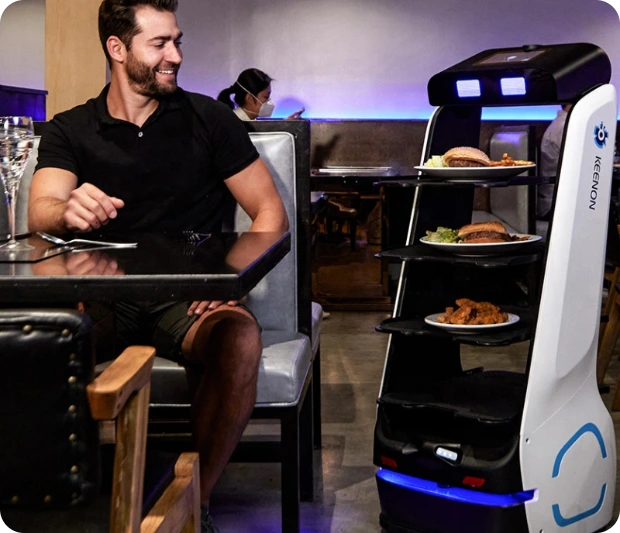
Offer your customers a brand-new concept that goes beyond the ordinary. Restaurant robots are not only servers but also technological marvels that transform your restaurant’s atmosphere. With their futuristic appearance and interactive features, these robotic waiters capture your customers’ attention and provide them with an unforgettable dining experience.
Robot waiters significantly reduce your business’s daily workload, allowing your staff to focus solely on customer satisfaction. By taking over serving tasks, these robots shorten service times and enable more tables to be served in the same amount of time.
Get offerRobot waiters are equipped with the most advanced autonomous navigation technology. Thanks to integrated sensors and laser radar technology, robot waiters instantly detect all obstacles in your establishment, calculate the optimal route in real time, and move safely while avoiding collisions. This intelligent system ensures the highest level of safety for people while guaranteeing that orders are delivered to tables smoothly and without error.
Robot waiter systems are an investment that directly impacts your business’s profitability. By delivering orders quickly and flawlessly, they increase your table turnover rate. Robot waiters allow you to serve more customers with the same staff, thereby boosting your business volume. This enables you to extend operating hours and accommodate more customers without compromising service quality.
Get offer
At the heart of customer satisfaction and loyalty lies the ability to fulfill your promises on time and accurately. The automated delivery system of our restaurant service robots ensures that orders reach the correct table every time, right on schedule.
Restaurant service robots ensure that orders reach the table as quickly as possible from the moment they leave the kitchen. This meets the expectations of customers who dislike waiting, thereby maximizing satisfaction. Happy customers visit more often, which in turn increases the business’s sales volume.
Your restaurant’s reputation is built on the consistent, high-quality service you provide. Ensuring orders are delivered to the correct tables eliminates confusion and negative customer experiences. Protect your business’s professional reputation by reducing delivery errors with service robots. Experience the privilege of always providing a higher quality of service with service robots.
Get offerThe restaurant robot waiter is equipped with lasers and sensors to avoid obstacles within the establishment.
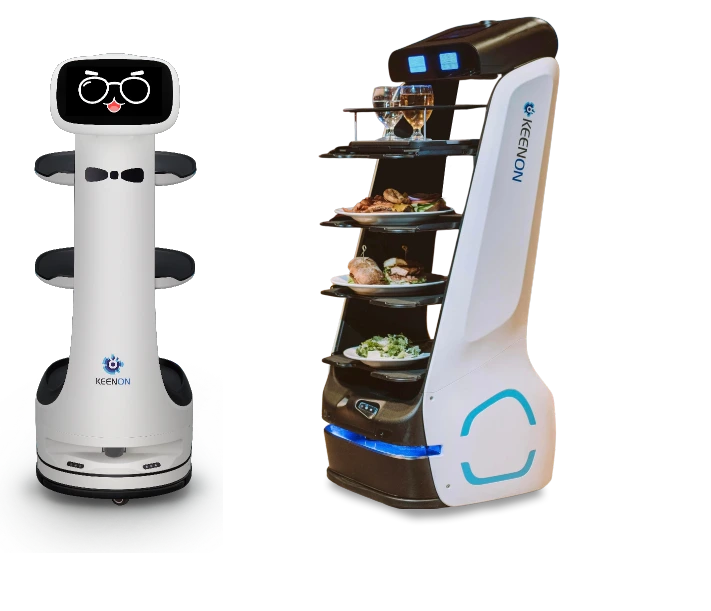
The restaurant service robot has a total carrying capacity of 40 kg, with 10 kg per shelf.
The restaurant service robot has a continuous operating time of 12-15 hours per day.
The smart robot waiter adapts its speed according to the slope of the floor with its enhanced speed limit function.
The robot waiter automatically goes to the charging station and charges itself when the battery level is low.
The waiter robot features a speaker capable of giving voice commands such as "Enjoy your meal" or "Please step aside."
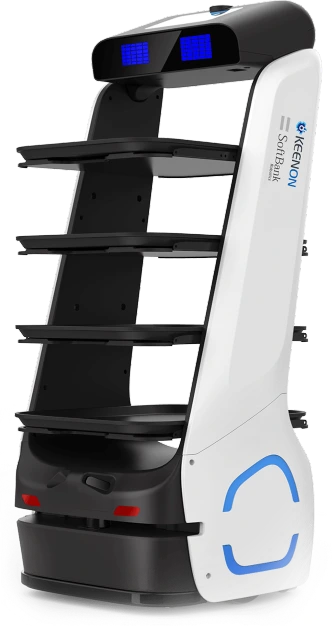
The service robot is equipped with 3 or 4-tier trays to serve multiple tables simultaneously.
Thanks to laser mapping technology, the restaurant robot does not require any floor taping or cabling.
Get the best service robots & robot waiters tailored to your needs at the best prices!
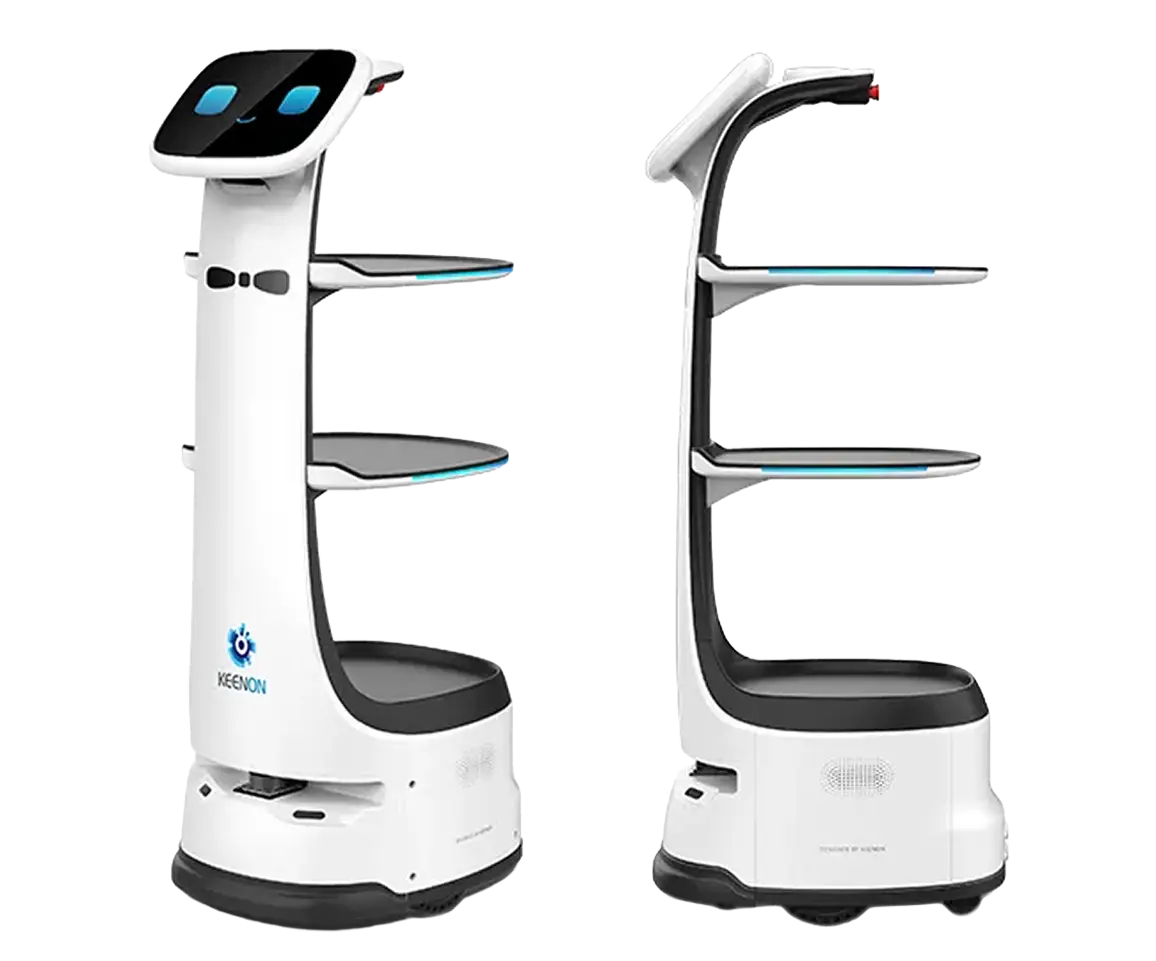
Maneuverability in
confined spaces, ideal for
cafes and restaurants
Maneuverability in confined spaces,
ideal for cafes and restaurants
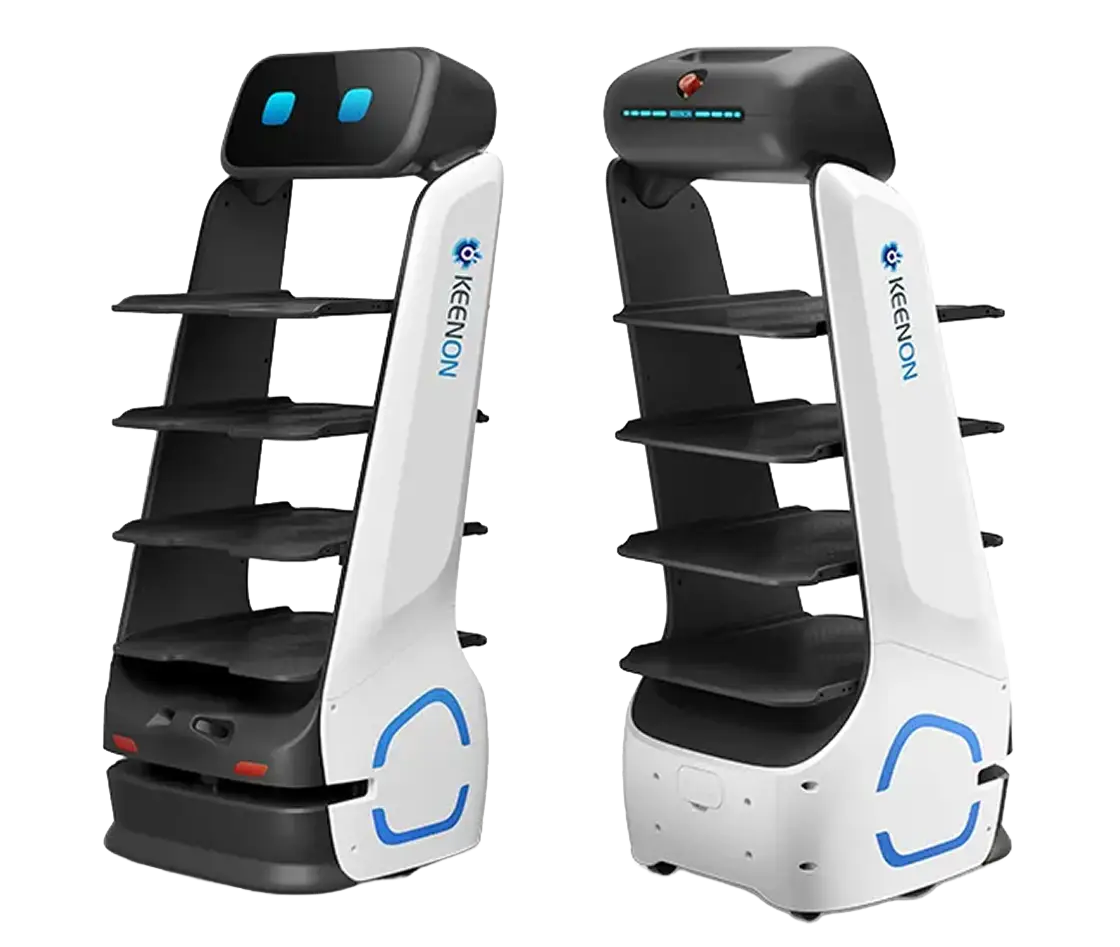
Large tray capacity and
intelligent route planning
for high-volume service management
Large tray capacity and route planning
for high-volume service management.
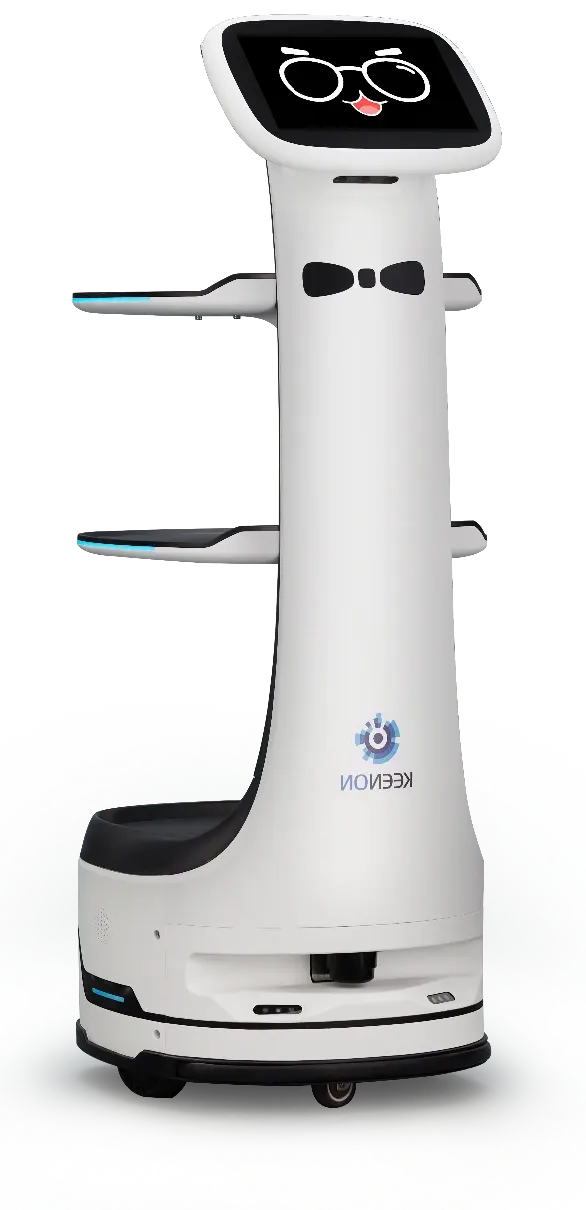
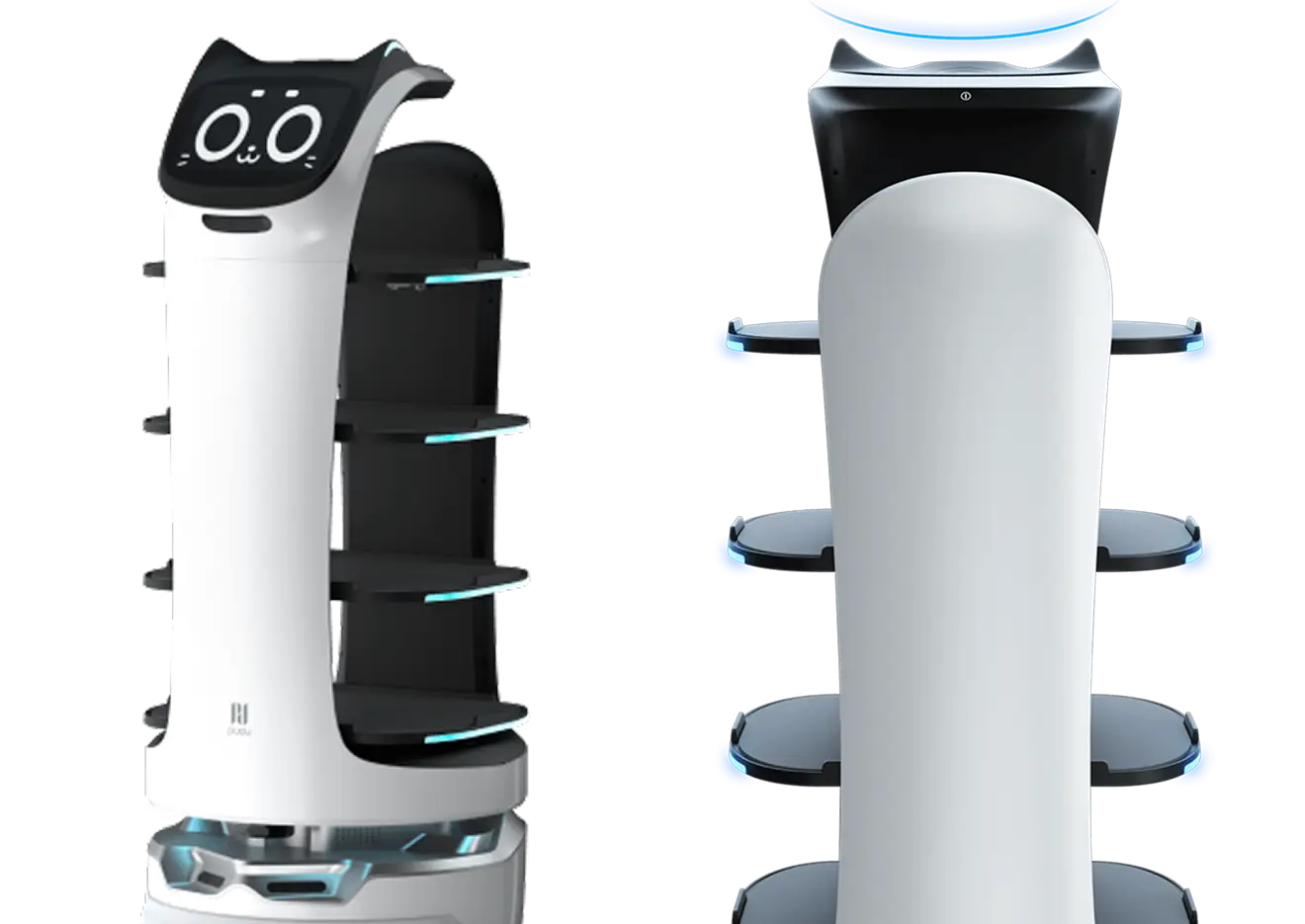
Voice interaction, AI facial
expressions and a superior
customer experience
Voice interaction, AI facial expressions
and a superior customer experience
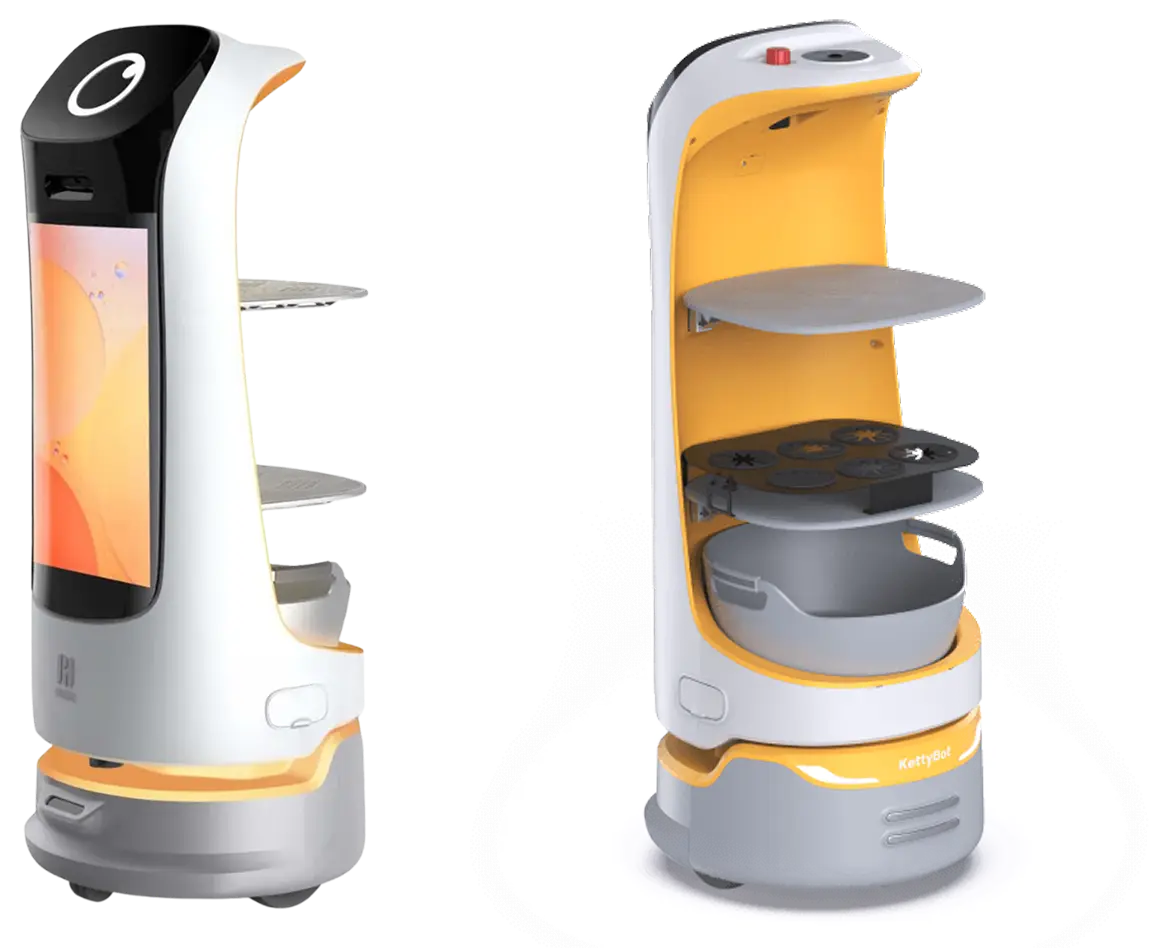
Large advertising screen
for marketing, welcome and
professional service robot
Large advertising screen for marketing,
welcome and professional service robot
Service robots are autonomous machines designed to transport food, beverages, and service supplies in venues such as restaurants, cafes, and hotels. Service robots typically deliver orders placed on trays to the appropriate table or room via the shortest and safest route. Thanks to their advanced sensors, they detect obstacles in their surroundings and move safely. Service robotstake on the task of transportation, allowing staff to focus on attending to guests.
Service robots have a wide range of applications across various industries:
• Restaurants and cafes are the most common places where they are used. Waiter robots handle tasks such as delivering orders to tables, clearing away empty plates, and presenting the menu. Service robots are widely used in kebab shops, fast-food restaurants, family restaurants, and cafes.
• In the hotel and hospitality industry, service robots are used not only in hotel restaurants but also for room service. Thanks to models that can integrate with elevators, they can move autonomously between floors to serve guests.
• In shopping malls and the retail sector, service robots are used in the food court areas of shopping malls not only to deliver orders but also to provide customer information, offer directions, and display advertising content.
• In hospitals and healthcare facilities, service robots assist healthcare workers with critical tasks such as transporting medications and supplies and maintaining sterile environments.
• At trade shows, events, and museums, the service robot can serve refreshments to attendees and provide information and directions to museum visitors.
• In educational institutions, such as university dining halls or private school cafeterias, the service robot can be used to increase service speed during busy lunchtime hours.
When selecting a service robot for any type of business, factors such as the size of the premises, floor conditions, customer profile, and expectations should be taken into account. A pre-installation site survey is conducted to determine the model best suited for the business.
Robot waitersoffer restaurant businesses numerous benefits, ranging from operational efficiency to the customer experience. These benefits can be listed as follows:
• The service robot can carry orders for multiple tables at the same time thanks to its high carrying capacity. While a human server can carry a maximum of 7–8 plates, a service robot can carry meals for 15–20 people in a single trip. This reduces service times and shortens customer wait times.
• Robot waiters work nonstop without needing breaks or time off. While reducing labor costs, they allow businesses to redirect their human resources toward more strategic and creative tasks.
• Hygiene awareness has increased in the post-pandemic era. Service robot minimizes the risk of infection by providing contactless service and helps maintain hygiene standards through regular disinfection protocols.
• Robot waiters create an unforgettable experience, especially for the younger generation and tech enthusiasts. Customers who come to the restaurant just to see the robot waiters contribute to the business’s organic marketing by sharing their experience on social media.
• Robot waiter minimizes human errors—such as incorrect orders or being sent to the wrong table—because it operates exactly as programmed. This reduces operational disruptions and improves service quality.
• Especially during the summer season, when the demand for staff in tourist areas increases, the restaurant robot offers an effective solution for businesses to meet their staffing needs.
Robot waiter prices vary depending on the brand, technology, and carrying capacity. Restaurant service robot models typically range in price from $6,000 to $15,000.
To ease cash flow for businesses, service robot rental and financing options are also available. For example, the smallest service robot model is available for rent at approximately 100,000 TL per month. With this plan, businesses can start using robot waiter technology without making a large upfront payment.
Robot waiters have two different interaction modes tailored to various usage scenarios to integrate into restaurant workflows:
• Delivery Mode: This is the most common method of use. The waitstaff takes the order, calls the robot waiter, and places the plates on the robot. They then select the table to which the robot should go from the robot’s screen. The robot waiter proceeds to the selected table and delivers the meal.
• Order Placement Mode: On some advanced service robot models, customers can select their order from the screen on the robot. The robot waiter transmits the order to the restaurant’s software. Once the order is prepared in the kitchen, the service robot completes the service by bringing the meal to the customer’s table.
The carrying capacity per tray of a standard waiter robot typically ranges from 10 kg to 40 kg. Service robot models usually feature 3- or 4-tier trays. This allows them to carry orders for multiple tables at the same time. Restaurant robot tray dimensions vary by brand and model, but are designed to accommodate a wide range of sizes, from standard porcelain plates to large serving trays.
Yes, safety is the top priority. Service robot models use LIDAR, depth cameras, and collision sensors to detect obstacles around them. Restaurant robots automatically slow down, stop, or reroute when they detect an obstacle. In fact, many waiter robots can politely ask for space with voice prompts like, "Could you please step aside for a moment?"
Service robot models typically run on high-capacity lithium batteries. They provide an average active operating time of 10 to 16 hours on a single charge. When the battery level drops, the waiter robot automatically returns to the charging station to recharge. A full charge typically takes between 2 and 4 hours. This allows the restaurant robot to provide uninterrupted service during the busiest hours when the establishment is open.
Service robots typically operate on wheeled systems and are not capable of climbing stairs. However, restaurant robots are designed to be compatible with wheelchair ramps. They move easily on low-pile carpets, tile, wood, and concrete floors. Performance may be affected on high-pile carpets or excessively steep ramps. Before installing a robot waiter, a site survey is conducted to ensure floor suitability.
The goal of robot waiters is not to take jobs away from human staff, but to help them work more efficiently. Robot waiters take on the role of busboys, especially during peak hours. Instead of wasting time carrying plates with the service robot, staff can focus on attending to guests, taking orders, and enhancing comfort. As a result, staff satisfaction increases, turnover rates decrease, and the business can serve more tables with fewer servers.
Restaurants that use restaurant robots can allocate their human resources to more strategic areas. Additionally, because robot waiters take on repetitive and physically demanding tasks, staff are more motivated, which directly translates to higher customer satisfaction.